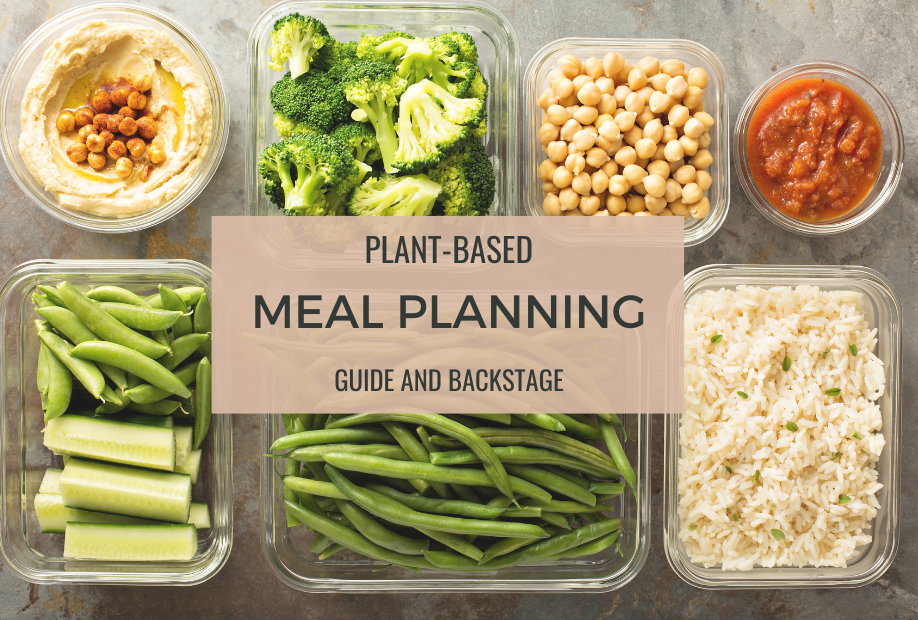
I’ve always been an organised person. But I’ve never imagined that such skill would allow me to find peace and balance towards food and habits. That’s because putting my organisation skills into practice in the kitchen has really helped me find my way into a healthier eating routine. It has also allowed me to create a method to build balanced, nutritious and different meals throughout the week. This method ensures a combination of healthy eating + different meals + time-saving and I’m super excited to share it with you.
First things first, I think part of meal planning and prepping is just working out what works best for you, as not all options I’m sharing here are going to suit everyone.
But I really hope this can give you insights on how you may use any of this to make your eating routine easier and healthier.
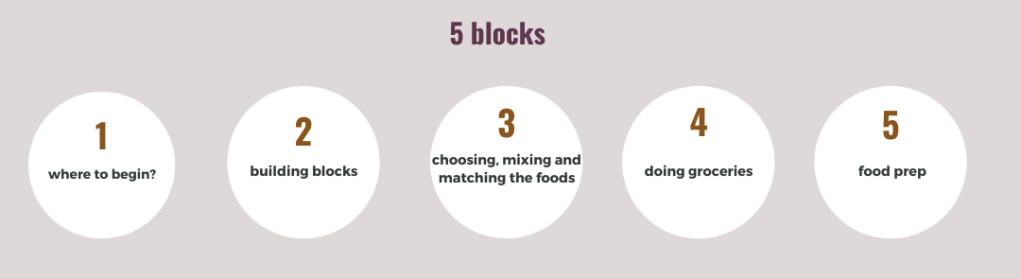
I’m dividing this guide into 5 blocks so that it is easier for us to visualise the whole process in a more organised way. The 5 blocks are:
Let’s begin?
1 – Where to begin?
I always like to start off with the following topics:
- Cravings: what kind of foods are you craving this week? These should go into your list first! 🙂
- Pantry: What are the foods you’ve already got at home and need/want to use? Are there any frozen foods you can just warm up and it’s ready?
- Week: How does your upcoming week look like? Are you eating out? Do you have any events planned? Will you need to prepare a lunchbox? This will help you plan the amounts of food to prepare or any other specific item that you might need.
- Recipes: Is there any recipe you’d like to try out this week? Put it aside!
With this in mind, we’ll move on to the building blocks. But first, let me share my backstage.
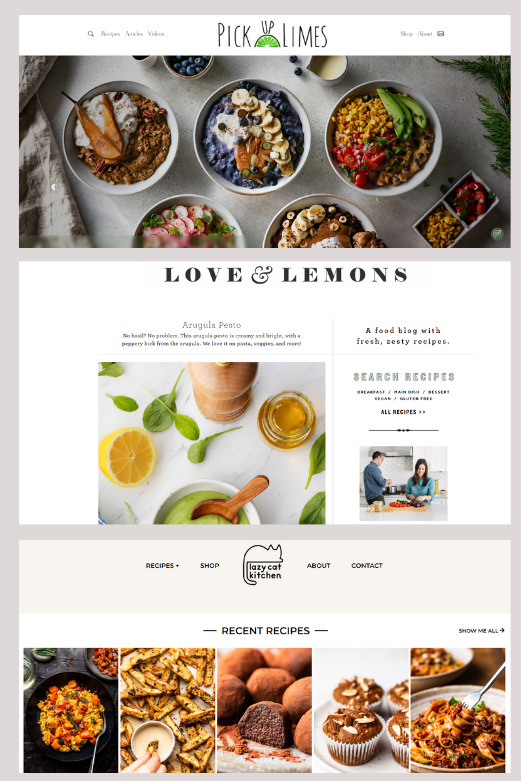
Here are some of the websites I go for plant-based/vegan recipes
- Pick up limes – pickuplimes.com
- Lazy cat kitchen – https://www.lazycatkitchen.com
- Love and lemons – https://www.loveandlemons.com
- Rainbow plant life – rainbowplantlife.com
- Deliciouslyella – https://deliciouslyella.com/
2 – Building blocks
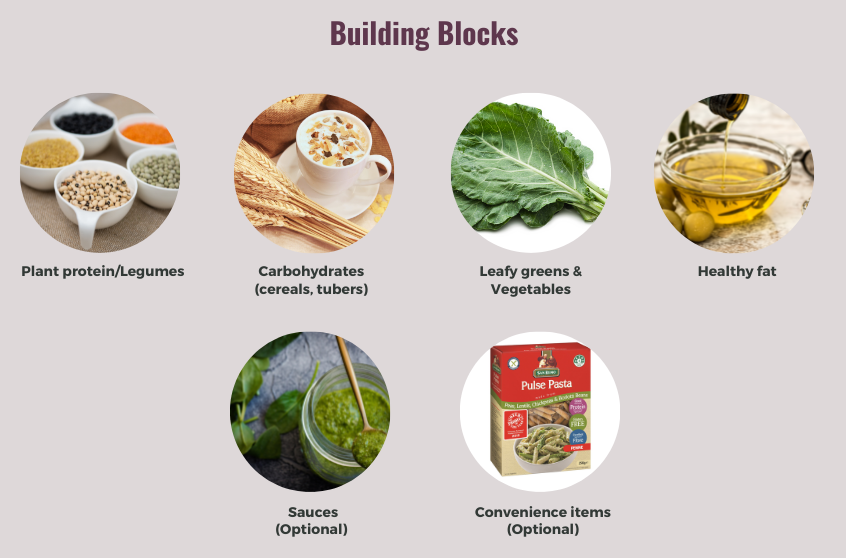
Keeping the building blocks in mind will help you create balanced meals which include the main food groups we need.
- Plant protein/Legumes: pick one to two sources
- Carbohydrates (cereals, tubers): pick one to two sources
- Leafy greens and veggies: two to three sources
- Healthy fat: one source
- Sauces you like will help add flavour to your meals (optional)
- Convenience items (wraps, pulse pasta, wholegrain toasts, sourdough, falafel, etc.) This is optional but will help you create different combinations, if that’s what you looking for.
With this in mind, let’s move on!
3 – Choosing, mixing and matching foods
This is where the fun begins! Let your creativity take the lead! 🙂
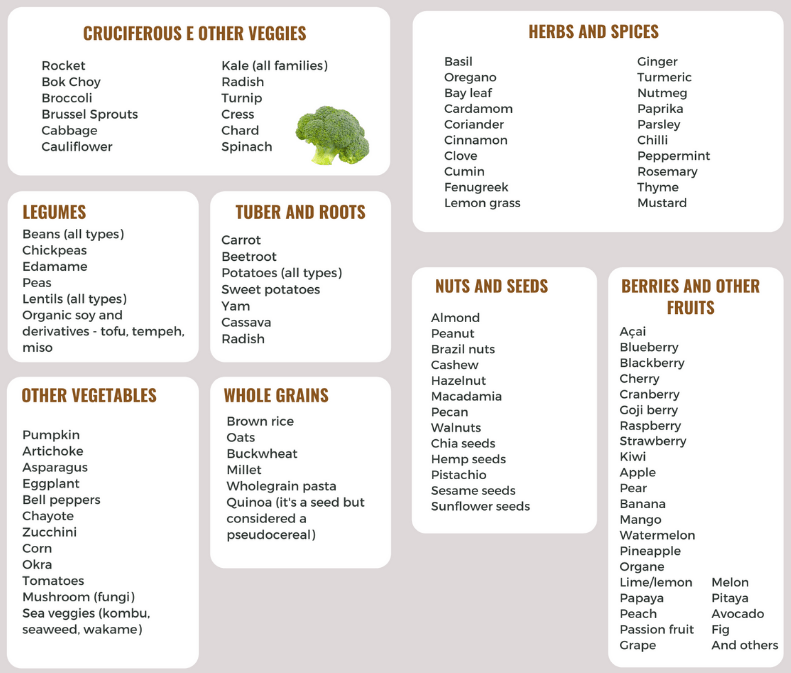
To make your life easier, I’m sharing down below a list of foods to include in a plant-based diet (some of them are part of the Daily Dozen from Dr Michael Greger – an American doctor who has extensive research and publications on plant-based eating). As a side note, you can find more information about his projects here: https://nutritionfacts.org/
You also may consider:
- What foods you like the most, of course! 🙂
- What foods are easier on your digestion
- Season produce and what’s more accessible for you
- Rainbow: Use the 3-colour rule and aim to pick at least 3 different colours.
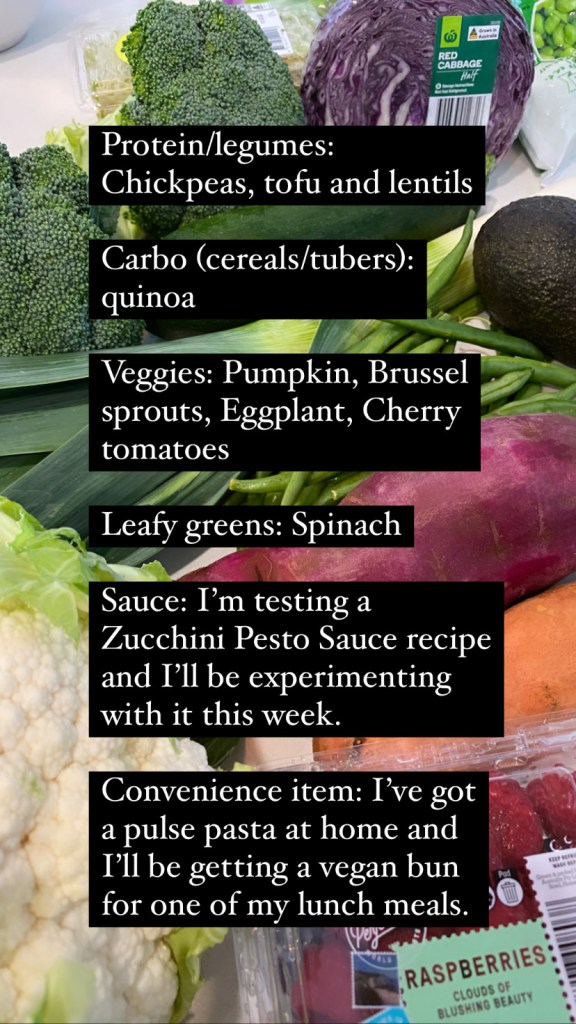
I’ll share my food choices for a random week down below.
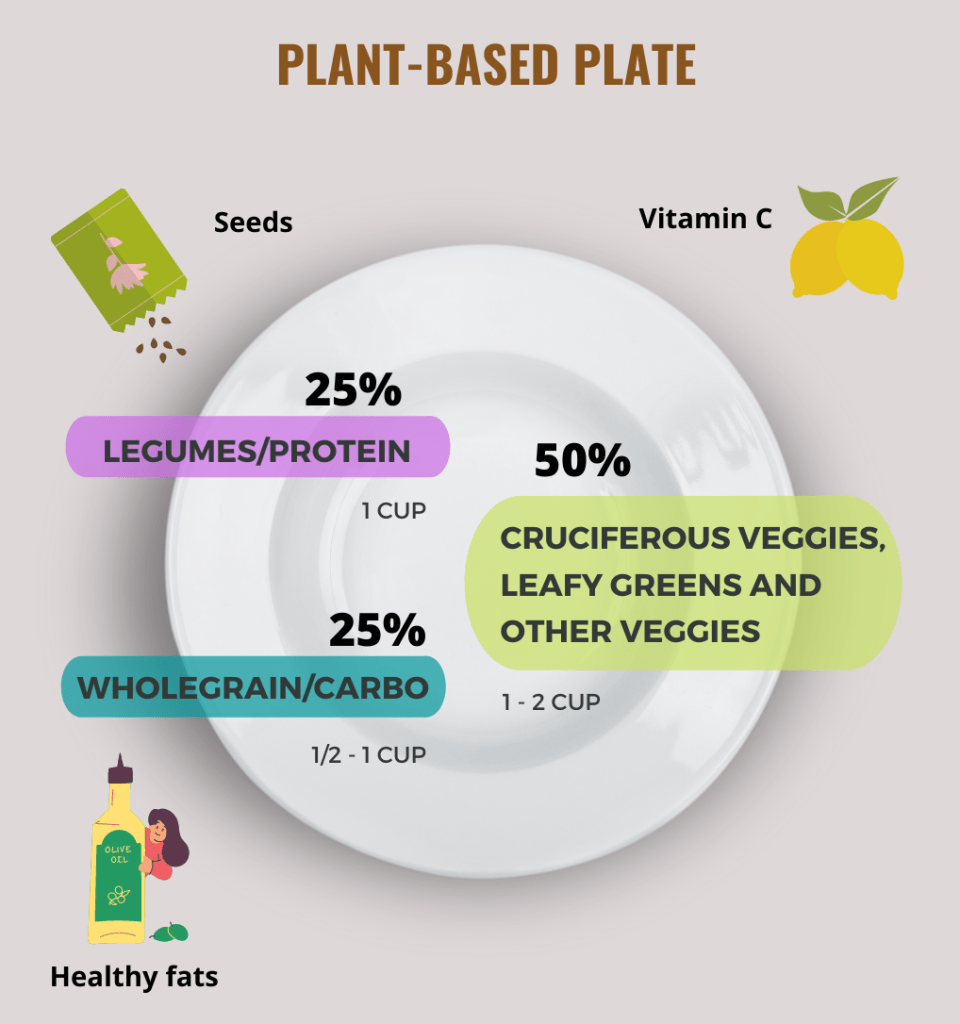
After choosing your foods, you can start mixing and matching them according to your preferences. You may also use the “balanced plant-based guide” below as a template for creating your meals. This will give you a general idea of what a balanced plate may look like in terms of proportions and macronutrients and micronutrients distribution.
Here is my backstage with my food choices and meals I’ll be creating. This may serve as an inspiration for creating your own meals. As you’ll be able to notice, I can create a couple of different meals by mixing and matching the foods, sauces and convenience items I’ve chosen according to my preferences and tastes.

4 – Groceries (shops/markets)
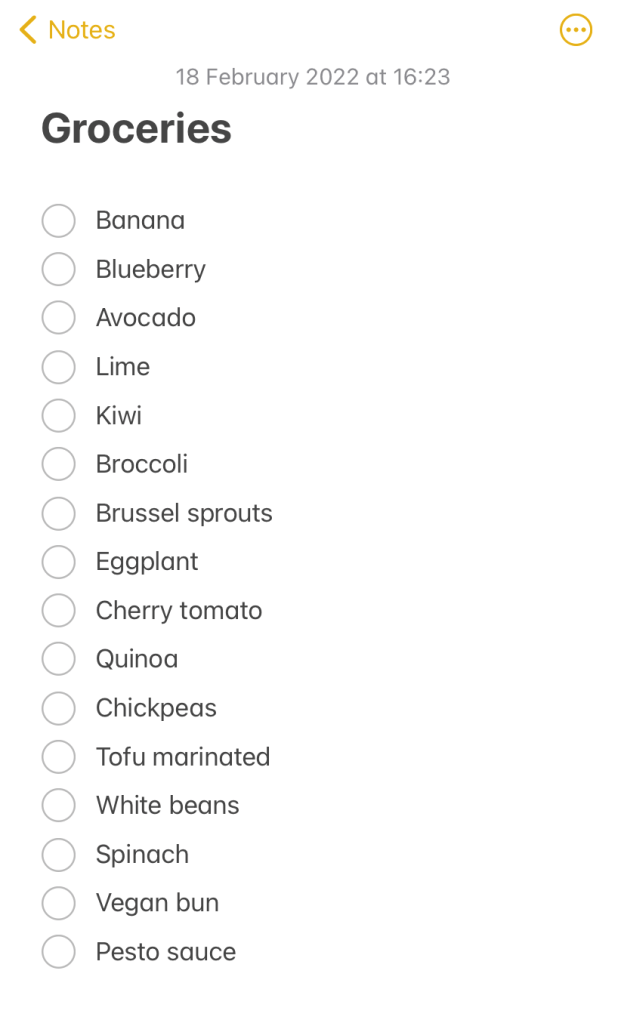
There’s no secret here! Just organise a day for you to do your groceries having a shopping list a hand. I have a note on my iPhone with a couple of preset items I usually buy and I share this list with my partner so that both of us can have access to it. It makes our lives so much easier!

5- Food Prepping
Choose a day for you to prepare the food. I usually take about 1.5-2hrs to get everything done, but you don’t need to work that way. If you prefer to spread small tasks across the week, do it! Do it in a way that suits your better. As I said before, meal planning and prepping is working out what works best for you.
The important thing to notice here (and part of what this method is about) is that you will be cooking the foods individually or in combinations you want and store them in individual containers. You won’t be storing pre-made dishes in the same food container.
Let’s say one of my meals is roasted pumpkin, chickpeas, spinach, eggplant and quinoa. I won’t be storing them together in the same container. I will store each one of them separately and during the week I will match and mix them.
This will allow you more flexibility in case you decide to make a different combination, use different items, or even eat them in different ways (eg. roasted pumpkin can easily become a creamy pumpkin soup dish if I wish). This will allow space for you to play around, use your creativity and go with your mood of the day.
This is why I believe so much in this method as it reflects my perspective on how healthy eating should be: simple, balanced, nutritious, tasty, flexible and adjusted for our preferences and routines. This isn’t something to make you feel rigid, but rather it’s a method to give you freedom and flexibility.
I believe healthy eating shouldn’t be rigid or strict. It should nourish you physically, mentally and emotionally in a way that works for you.


I really hope this information can be useful for you. I’d love to hear your thoughts and comments on this!
Thanks for being here,
Paula
 Paula Aguina | Nutrition